From Silence to Voice: Bringing the Independent Redress Mechanism to Communities in Balaka, Malawi
This blog was written by Godfrey Mfiti, Executive Director of the Institute of Sustainable Development (ISD). ISD was one of the Civil Society Organisations (CSO) selected to receive the 2026 IRM CSO Advocacy Grant.
In the villages of Balaka District in southern Malawi, climate change is not a distant forecast. It is the failed maize crop, the dried-up river, the flooded home. For years, communities have lived with these realities. What many had not lived with until recently was the knowledge that they have a right to be heard when climate projects affect their lives.
When the Institute of Sustainable Development (ISD) set out to raise awareness of the Green Climate Fund’s Independent Redress Mechanism (IRM), we knew the task would be simple in theory and complex in practice. How do you take a global accountability mechanism and make it real for a farmer in Traditional Authority Nsamala or a women’s group in Chanthunya? That question shaped every choice we made between April and October 2026.
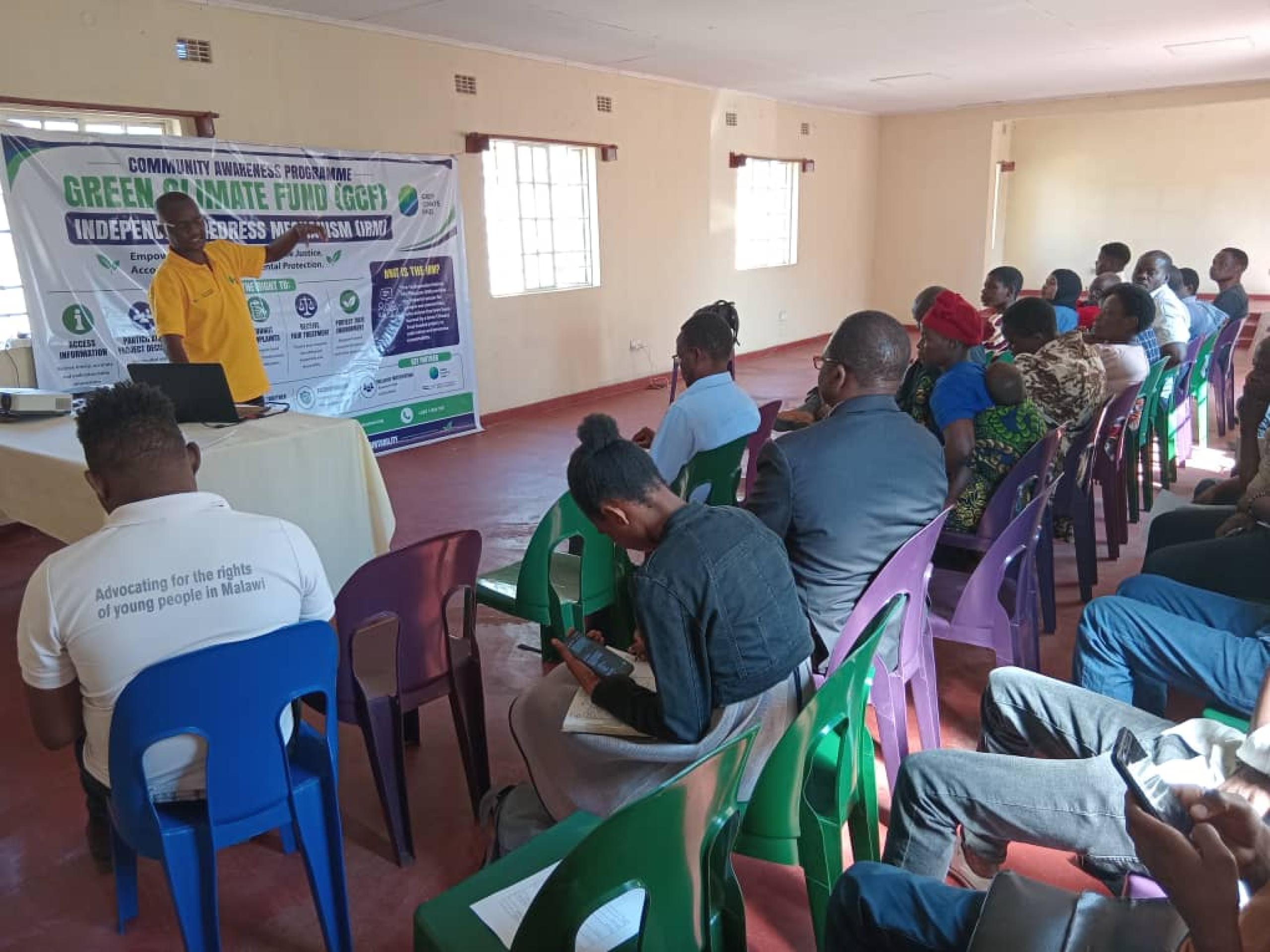
Godfrey Mfiti, Executive Director of the Institute of Sustainable Development, addresses district stakeholders, traditional leaders, civil society organisations and media during the IRM town hall in Balaka on 16 July 2026. The session focused on practical ways communities can access the Independent Redress Mechanism. Photo: Institute of Sustainable Development (ISD)
Starting where people are
We began, as all good community work must, by listening. In two sensitisation workshops held in April and July, we sat with traditional leaders, women, youth, local civil society organisations and ordinary residents. We did not open with jargon. We opened with questions: What happens when a project changes the water you depend on? Who do you turn to if you were never consulted?
The answer, for most participants, was silence or informal complaint to a local official who often had no clear pathway either. Introducing the IRM its two pathways of Problem-Solving (mediation) and Compliance Review felt like handing people a key they did not know existed.
“Before this workshop I had never heard that communities can complain about a Green climate Change project without fear. Now I know there is an independent place where our concerns can be heard. I will share this information with the women in our forum.”
- Esther Mkusangombe, Balaka Women Forum
Taking the message to the airwaves
Workshops reach those who can attend. Radio reaches those who cannot. In partnership with Balaka Community Radio we aired two programmes, including one interactive call-in session. Listeners asked the questions that matter most in daily life: Can we report harm even if the project is already underway? What protection exists against retaliation?
The call-in format turned passive listening into active learning. It also reminded us that localisation is more than translation into Chichewa or Yao. It is about connecting global concepts to the realities of drought, displacement and decision-making that people already understand.
“Our radio listeners kept calling in to ask how they can report harm caused by projects. The interactive session showed that people want information and protection. We are ready to continue airing accountability messages.”
- Francis Billiat, Balaka Community Radio
Bringing the whole system into one room
On 16 July 2026 we convened a district stakeholder town hall. District officials, traditional authorities, civil society organisations, faith leaders and journalists sat together. The conversation moved beyond awareness into practical coordination: How can local structures support communities to document concerns? How does the IRM relate to existing project-level grievance mechanisms?
What emerged was not confrontation but recognition. Accountability works best when it is shared. Faith leaders spoke of moral responsibility. Journalists spoke of amplifying unheard voices. Community representatives spoke of the simple desire not to be left behind.
“As a pastor working with communities affected by droughts and floods, I see the value of knowing our rights. When projects come, people should not be silent. The IRM gives us a peaceful and formal way to seek justice.”
- Rev. Dr. M. Mpoka-Phiri, Balaka District Pastors Fraternity
Leaving something people can keep
IEC materials: brochures, leaflets and visibility (Branded Clothes) items, were produced and distributed. Designed for low literacy audiences and aligned with IRM messaging, they gave participants something tangible to take home and share. National media coverage in Times Malawi, The Maravi Post and Zodiak Broadcasting Station carried the Balaka conversation beyond the district, placing climate accountability on a wider public agenda.
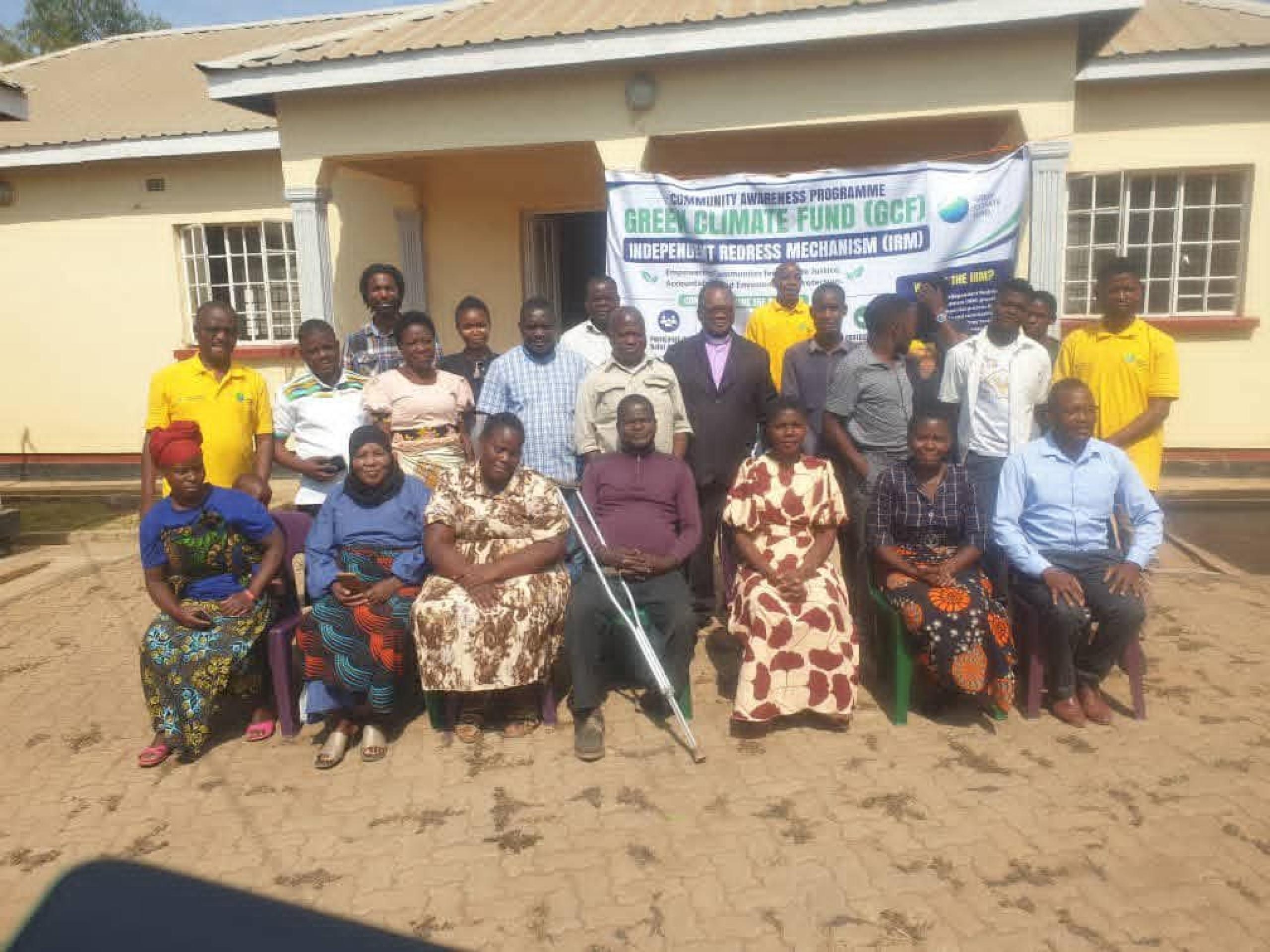
Participants gather for a group photograph at the close of the district stakeholder town hall on 16 July 2026. The meeting brought together District Council officials, traditional authorities, civil society organisations, faith leaders, community representatives and journalists to strengthen local ownership of climate accountability. Photo: Institute of Sustainable Development (ISD)
What the work taught us
Several lessons stand out. First, communities do not need to be convinced that accountability matters they need to be shown that a safe, independent pathway actually exists. Second, multi-channel outreach works: workshops build depth, radio builds reach, town halls build legitimacy, and media builds pressure for sustained attention. Third, the most powerful messengers are often the participants themselves women leaders, pastors, youth organisers and local journalists who carry the message long after the project team has left.
We also learned that explaining the IRM almost always means starting further back — with climate change itself, with how the Green Climate Fund works, and with why redress is a right rather than a favour. Shared understanding is the real milestone.
“Young people are often the first to feel the effects of climate change yet the last to be consulted. Knowing that the IRM accepts complaints from youth and community groups is empowering for our organisation.”
- Aubrey Duwal, Tithandizane Youth Support Organisation
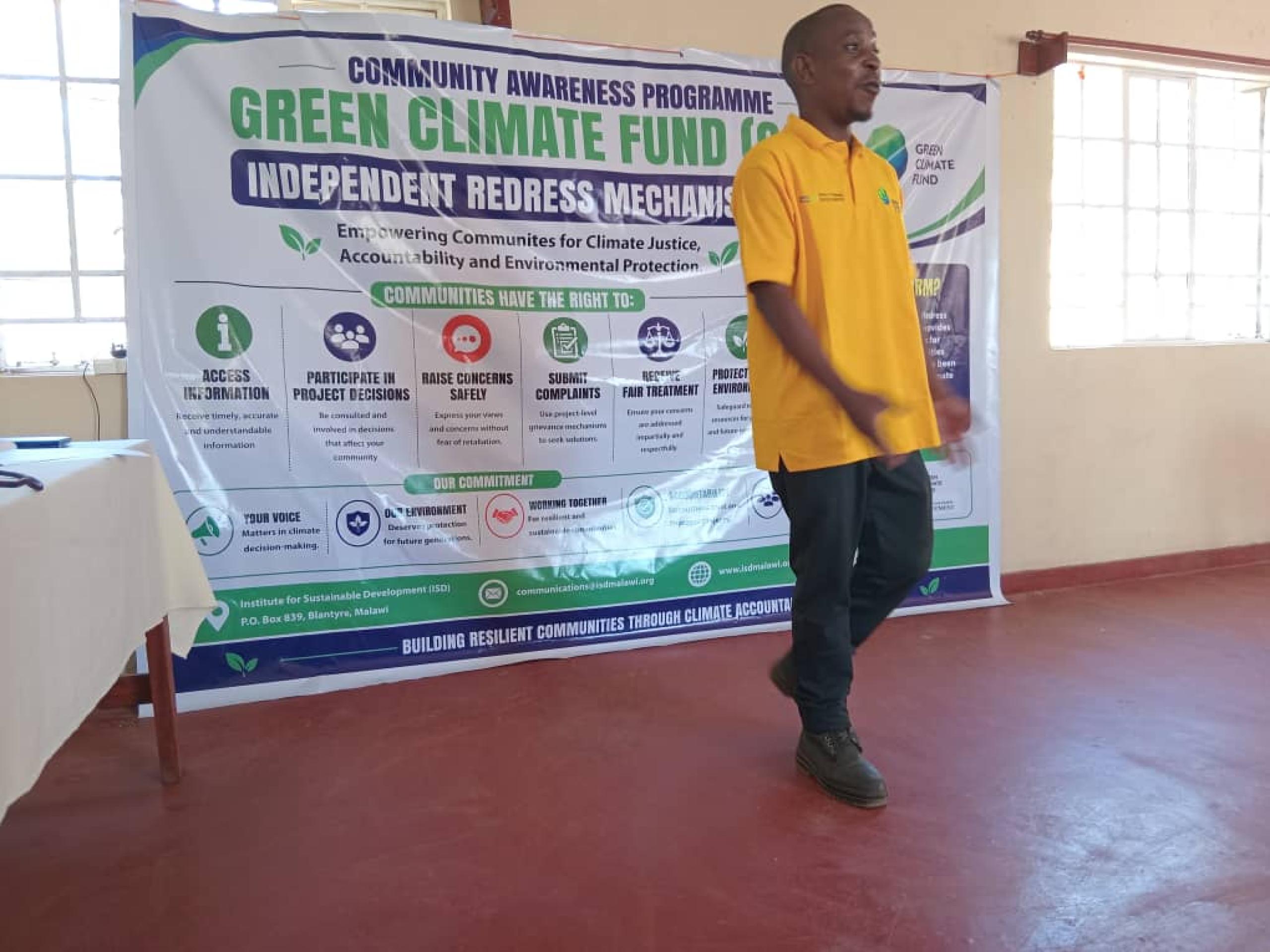
Members of the ISD project team stand in front of the IRM awareness banner during outreach activities in Balaka District. Visibility materials and branded banners helped reinforce the message that communities have a right to information, participation and redress under Green Climate Fund-supported projects. Photo: Institute of Sustainable Development (ISD)
Looking ahead
The formal project period has ended, but the work of making the Independent Redress Mechanism known and usable in Malawi continues. ISD will integrate IRM awareness into future climate justice and environmental governance programmes. We will keep working with community radio, women’s forums, youth groups and traditional structures so that knowledge does not remain locked in a workshop report.
To fellow civil society organisations working near GCF-supported projects: share the resources, host the conversations, and keep asking the difficult questions. To community members: your voice is not an interruption to climate action it is one of the conditions for its success.
Accountability is not a barrier to resilience. It is one of its strongest foundations. In Balaka we saw communities move from silence to informed voice. That shift, multiplied across districts and countries, is how climate finance becomes climate justice.
Godfrey Mfiti
Executive Director
Institute of Sustainable Development (ISD), Malawi